Canon 80D: A Comprehensive Manual Overview (Updated 12/30/2025)
This guide details the Canon 80D’s features, covering setup, focusing, shooting modes, video, image quality, lenses, connectivity, and troubleshooting—updated as of today’s date.
Welcome to the Canon 80D experience! This powerful DSLR bridges the gap between enthusiast and professional photography. This manual serves as your comprehensive companion, unlocking the camera’s full potential. Whether you’re capturing stunning landscapes on Cannon Lake, documenting fishing adventures on the St. Croix River, or creating YouTube videos, the 80D delivers exceptional results.
We’ll explore its features, from Dual Pixel CMOS AF to versatile shooting modes. This guide will help you navigate menus, understand image quality settings, and utilize compatible lenses – Canon EF, EF-S, and even third-party options like Sigma.
Key Features and Specifications
The Canon 80D boasts a 24.2MP APS-C CMOS sensor and 45-point all-cross-type AF system, ensuring sharp, detailed images. It features Dual Pixel CMOS AF for smooth, accurate video recording, crucial for YouTube content creation. Expect a continuous shooting speed of up to 7fps.
Powering this is a Lithium-Ion battery (specifications detailed later), supporting extended shooting sessions. Connectivity includes Wi-Fi and NFC for easy image transfer. Its robust build is suitable for outdoor photography, even near rivers and lakes, as seen in Minnesota fishing reports.
Understanding the Camera Body
The Canon 80D’s body is designed for comfortable handling and intuitive control. It features a robust build, suitable for various environments, including those encountered during outdoor photography like on the Cannon River or Lake. The camera’s layout prioritizes accessibility to key settings.
Further sections will detail the functions of the front, rear, and top panel controls. Understanding these elements is vital for efficient operation, whether capturing still images or recording video content for platforms like YouTube.
Front Panel Controls
The Canon 80D’s front panel houses essential controls for immediate access during shooting. These include the lens release button, depth-of-field preview, and customizable function buttons. The front dial adjusts aperture in Av mode or manual settings.
These controls are strategically placed for comfortable operation, even while using various Canon EF and EF-S lenses. Familiarizing yourself with these elements enhances responsiveness, particularly when fishing or capturing fast-paced action.
Rear Panel Controls
The rear panel of the Canon 80D is densely populated with controls for comprehensive camera operation. Key features include the LCD screen, directional buttons for menu navigation, the SET button, and the Quick Control dial.
Additional buttons manage image playback, white balance, drive modes, and autofocus settings. These controls are vital for adjusting settings on the fly, crucial for adapting to changing lighting conditions during outdoor photography or video content creation.
Top Panel Controls
The Canon 80D’s top panel houses essential controls for immediate access during shooting. These include the power switch, main dial for mode selection (P, Tv, Av, M, B), and the shutter button with surrounding zoom lever.
Furthermore, dedicated buttons manage ISO speed, white balance, and autofocus point selection. These controls allow for quick adjustments without navigating menus, essential for capturing fast-paced action or adapting to dynamic lighting scenarios.
Setting Up Your Canon 80D
Initial setup involves inserting a compatible battery and memory card, then powering on the camera. Select your preferred language, date, and time settings. Customize the button functions to match your shooting style for efficient operation.
Explore the menu system to configure image quality, autofocus behavior, and video recording preferences. Proper initial setup ensures a personalized and optimized shooting experience with your Canon 80D.
Initial Camera Setup
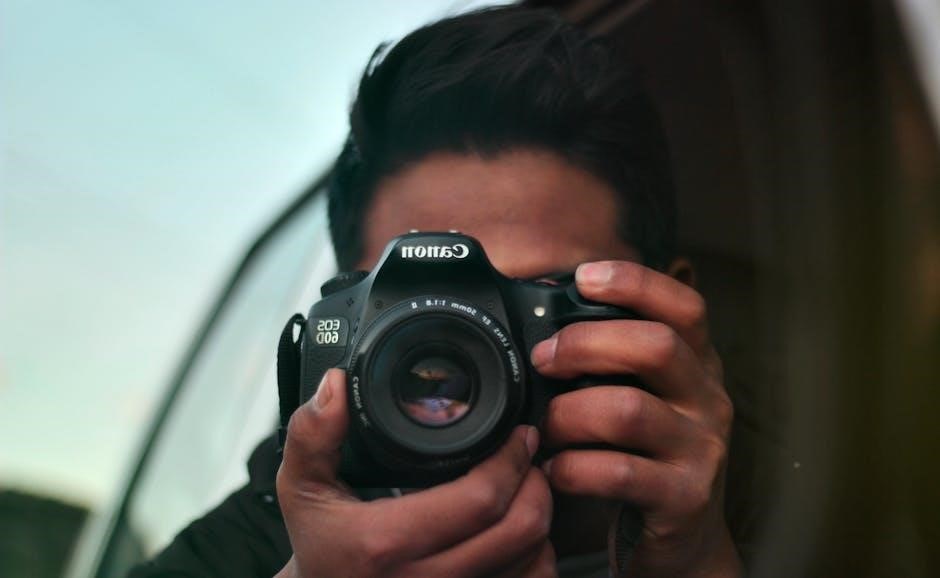
Begin by inserting a fully charged battery and a compatible SD card. Power on the Canon 80D and follow the on-screen prompts to set the region, date, and time. Configure the display settings for optimal viewing in various conditions.
Register your camera for warranty purposes. Finally, format the SD card within the camera to ensure compatibility and erase any pre-existing data, preparing it for your first photos!
Menu Navigation and Customization
The Canon 80D’s menu system is organized into tabs: Shooting, AF, Exposure, Autofocus/MF, Picture Quality, and Setup. Utilize the directional buttons and SET button to navigate. Customize frequently used settings like image quality, autofocus modes, and metering modes for quick access.
Explore the “Custom Functions” to tailor the camera to your shooting style, optimizing workflow and enhancing overall control.
Focusing System: Dual Pixel CMOS AF
The Canon 80D boasts Dual Pixel CMOS AF, providing incredibly smooth and accurate autofocus during both still photography and video recording; This system utilizes on-sensor phase detection for fast and reliable focusing.
It covers a wide area of the sensor, ensuring subjects remain sharp even when moving. Explore various AF modes and point selection options for optimal performance in diverse shooting scenarios.
Understanding AF Modes
The Canon 80D offers a variety of AF modes tailored to different shooting situations. One-Shot AF is ideal for static subjects, locking focus when the shutter button is half-pressed. AI Servo AF continuously tracks moving subjects, maintaining focus as they change position.
AI Focus AF intelligently switches between One-Shot and AI Servo. Manual Focus allows precise control, while Focus Assist features aid in achieving sharpness.
AF Point Selection and Tracking
The Canon 80D provides extensive control over AF point selection; You can choose from single-point AF for precise targeting, zone AF for focusing on a defined area, or automatic selection for the camera to choose. AF point expansion assists in tracking moving subjects.
Customizing AF point behavior allows prioritizing specific points. Tracking sensitive settings adjust responsiveness to subject movement, ensuring consistently sharp results during dynamic shooting scenarios.
Shooting Modes Explained
The Canon 80D offers a versatile range of shooting modes. Aperture Priority (Av) controls depth of field, Shutter Priority (Tv) manages motion blur, and Manual (M) grants full creative control. Program (P) mode balances aperture and shutter speed automatically.
Scene Intelligent Auto selects optimal settings for common scenarios. Further modes include User Defined settings for personalized presets, ensuring adaptability for diverse photographic situations and creative visions.
Aperture Priority (Av) Mode
In Aperture Priority (Av) mode, you select the aperture (f-stop), controlling depth of field – how much of the image is in focus. The camera automatically sets the shutter speed for proper exposure.
Lower f-numbers (e.g., f/2.8) create shallow depth of field, ideal for portraits, while higher f-numbers (e.g., f/16) yield greater depth, suited for landscapes. Mastering Av mode unlocks creative control over image aesthetics.
Shutter Priority (Tv) Mode
Shutter Priority (Tv) mode allows you to dictate the shutter speed, controlling motion blur. Faster shutter speeds (e.g., 1/1000s) freeze action, perfect for sports or wildlife. Slower speeds (e.g., 1/30s) create motion blur, useful for conveying movement or in low light.
The camera automatically adjusts the aperture to achieve correct exposure. Experimenting with Tv mode is crucial for capturing dynamic scenes effectively and creatively.
Manual (M) Mode
Manual (M) mode grants complete creative control, letting you independently set both aperture and shutter speed. This is ideal for challenging lighting situations or when a specific look is desired. You’ll need to monitor the light meter to achieve proper exposure.
Mastering M mode requires practice, but unlocks full potential. It’s essential for consistent results and artistic expression, offering unparalleled control over your images.
Program (P) Mode
Program (P) mode offers a balance between convenience and control, automatically setting both aperture and shutter speed while allowing adjustments to ISO, white balance, and exposure compensation. It’s a versatile option for various shooting scenarios.
P mode is excellent for quickly adapting to changing conditions, providing a solid starting point. You can “shift” the program, favoring either aperture or shutter speed for creative effects.
Video Recording Capabilities
The Canon 80D excels in video, offering Full HD 1080p recording at up to 60 frames per second for smooth, detailed footage. It supports various frame rates, including 24fps for a cinematic look and 30fps for standard video.
Dual Pixel CMOS AF ensures fast and accurate autofocus during video recording. External microphone input allows for superior audio quality, crucial for professional-looking videos and YouTube content.
Video Resolution and Frame Rates
The Canon 80D records in Full HD 1920 x 1080, offering excellent detail for most video applications. Frame rate options include 24p, 25p, 30p, 50p, and 60p, providing creative flexibility.
Higher frame rates (50p/60p) are ideal for slow-motion effects, while 24p delivers a cinematic aesthetic. The camera also supports 720p recording at various frame rates, offering a lighter file size option when needed.
Audio Recording Options
The Canon 80D features a built-in stereo microphone for basic audio capture, but for enhanced sound quality, an external microphone is recommended. A 3.5mm microphone input allows connection of various external mics, like lavalier or shotgun microphones.
Manual audio level control is available, ensuring optimal recording volume. Monitoring audio through headphones during recording is crucial for preventing clipping or low levels, resulting in professional-sounding videos.
Image Quality Settings
The Canon 80D offers versatile image quality settings, allowing photographers to balance file size and detail. Choosing between RAW and JPEG formats is fundamental; RAW provides maximum editing flexibility, while JPEG offers convenience and smaller file sizes.
White balance adjustment is critical for accurate color rendition. Auto White Balance works well in many situations, but custom presets or Kelvin temperature adjustments ensure optimal results under challenging lighting conditions.
RAW vs. JPEG
Selecting between RAW and JPEG impacts image editing capabilities. RAW files capture all data from the sensor, offering extensive post-processing control for adjustments to exposure, white balance, and detail. JPEG files are compressed, losing some data, but are smaller and ready for immediate use.
For critical work or significant editing, RAW is preferred. For casual shooting or quick sharing, JPEG provides a balance of quality and convenience.
White Balance Adjustment
Accurate white balance ensures colors appear natural. The Canon 80D offers presets like Daylight, Cloudy, and Tungsten, alongside Custom settings for precise control. Auto White Balance (AWB) is convenient but can be inconsistent.
Experiment with presets to match the lighting conditions. Custom white balance, using a gray card, delivers the most accurate results; Adjusting white balance in post-processing is possible, but shooting correctly initially is ideal.
Using Lenses with the Canon 80D
The Canon 80D utilizes the Canon EF and EF-S lens mounts, offering extensive compatibility. EF lenses provide full-frame coverage, while EF-S lenses are designed specifically for APS-C sensors like the 80D’s.
Third-party lenses from Sigma and others are also compatible, though verify functionality. Lens selection impacts image quality and creative possibilities; zoom lenses offer versatility. Consider lens features like image stabilization for sharper results.
Canon EF and EF-S Lenses
Canon’s EF lenses are renowned for their optical quality and broad compatibility, working seamlessly with the 80D. EF-S lenses, designed for APS-C cameras, are lighter and more affordable, offering excellent performance.
Choosing between EF and EF-S depends on your needs; EF provides future-proofing, while EF-S offers value. Explore Canon’s extensive lens lineup, considering focal length, aperture, and specialized features for diverse photographic styles.
Third-Party Lens Compatibility
The Canon 80D readily accepts lenses from Sigma and other reputable third-party manufacturers, expanding your options beyond Canon’s native lineup. These lenses often provide competitive features and pricing, offering alternatives for specialized photography.
Ensure compatibility by checking lens mount type (EF or EF-S) and verifying autofocus functionality. While generally reliable, third-party lenses may require firmware updates for optimal performance with the 80D.
Connectivity and Transferring Images
The Canon 80D offers versatile connectivity options for seamless image transfer. Built-in Wi-Fi and NFC enable direct smartphone pairing for quick sharing and remote camera control via the Canon Camera Connect app.
Alternatively, a standard USB port facilitates fast wired transfers to computers for editing and archiving. These methods ensure efficient workflow, allowing photographers to easily manage and distribute their captured content.
Wi-Fi and NFC Functionality
The Canon 80D’s Wi-Fi capabilities simplify image sharing and remote control. Connect to the Canon Camera Connect app on your smartphone for instant transfer of photos and videos. NFC allows one-touch pairing with compatible devices, streamlining the connection process.
This functionality enables wireless shooting, live view monitoring, and convenient social media uploads directly from the camera, enhancing your photographic workflow.
Connecting to a Computer via USB
Utilize a USB cable to establish a direct connection between your Canon 80D and a computer. This method facilitates high-speed image and video transfer, as well as allows the camera to function as a webcam for live streaming or video conferencing.
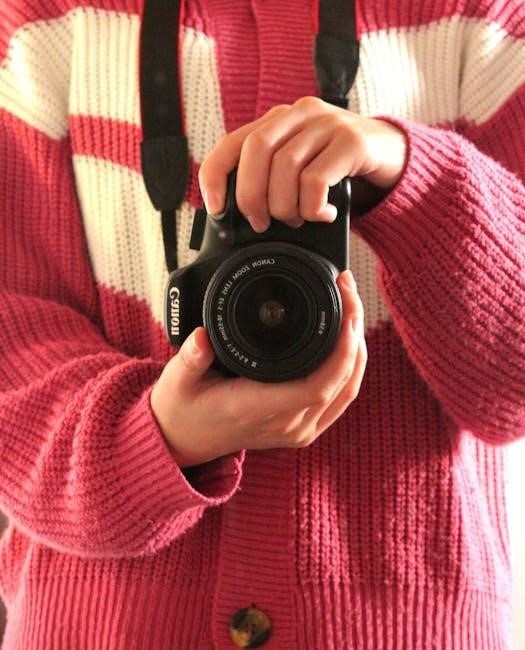
Ensure the camera is powered off before connecting. The Canon Digital Camera Solution software may be required for optimal functionality and image organization on your computer.
Battery and Power Management
The Canon 80D utilizes a Lithium-Ion battery, offering reliable power for extended shooting sessions. Battery specifications include a voltage of 40V, as seen in Black & Decker tool batteries, though Canon’s are rated at 2.5AH.
Proper charging and storage are crucial for longevity. Avoid extreme temperatures and fully charge the battery before extended use to maximize performance and lifespan.
Battery Specifications (Lithium-Ion)
The Canon 80D’s battery adheres to Sony’s Lithium-Ion Rechargeable Battery specifications, outlined in document ED05F-08-8. This scope covers the battery’s performance characteristics and safety guidelines.
While specific capacity details vary, some units report 2.5AH. Proper handling, charging, and storage are vital for optimal battery life and preventing potential issues. Refer to the full specification for comprehensive details.
Charging and Battery Life
The Canon 80D utilizes a Lithium-Ion battery, requiring careful charging practices for longevity. While specific life varies with usage, optimizing power management is key.
Avoid extreme temperatures during charging and storage. Fully discharging the battery frequently can reduce its lifespan. Monitor battery levels during extended shoots and consider a spare battery for uninterrupted operation, especially during outdoor photography sessions.
Troubleshooting Common Issues
Encountering problems? Focusing issues can often be resolved by checking AF settings and ensuring sufficient light. Image quality concerns might stem from incorrect white balance or suboptimal lens performance.
Downrigger malfunctions or camera failures require systematic checks. Refer to online forums for user-reported solutions. If problems persist, consult Canon support or a qualified repair technician for assistance. Remember to check battery charge levels first!
Focusing Problems
Is your Canon 80D struggling to achieve sharp focus? First, verify your selected AF mode aligns with the subject’s movement. Ensure adequate lighting, as low light impacts autofocus performance. Check AF point selection; is it accurately positioned on your intended subject?
Clean the lens contacts and sensor. If issues persist, try a different lens to isolate the problem. Consult the manual for Dual Pixel CMOS AF adjustments.
Image Quality Concerns
Experiencing unsatisfactory image quality with your Canon 80D? Begin by reviewing your chosen image quality setting – RAW offers greater editing flexibility than JPEG. Confirm correct white balance selection for accurate colors. Assess your ISO setting; higher values introduce noise.
Ensure proper exposure and sharp focus. Lens quality significantly impacts results; consider a higher-quality lens if needed.
Advanced Features
Unlock the Canon 80D’s creative potential with its advanced features. Explore the diverse Creative Filters for unique artistic effects directly in-camera, simplifying post-processing. HDR Mode expands dynamic range, capturing detail in both highlights and shadows.
Experiment with these tools to elevate your photography and videography, adding a personalized touch to your creations. These features enhance image storytelling.
Creative Filters
The Canon 80D offers a range of built-in Creative Filters for instant artistic expression. These filters allow you to transform images directly within the camera, eliminating the need for extensive post-processing. Options include Grainy Black & White, Soft Focus, and Toy Camera, each offering a distinct aesthetic.
Experiment with these filters to quickly achieve unique looks and enhance your photographic vision, adding a personalized touch to your images.

HDR Mode
The Canon 80D’s HDR (High Dynamic Range) mode expands the range of tones in your photographs, capturing detail in both bright highlights and dark shadows. This is achieved by taking multiple exposures and merging them into a single image.
Utilize HDR mode in high-contrast scenes to prevent blown-out highlights or blocked-up shadows, resulting in more balanced and visually appealing photographs. Remember to use a tripod for optimal results.
Canon 80D for Fishing and Outdoor Photography
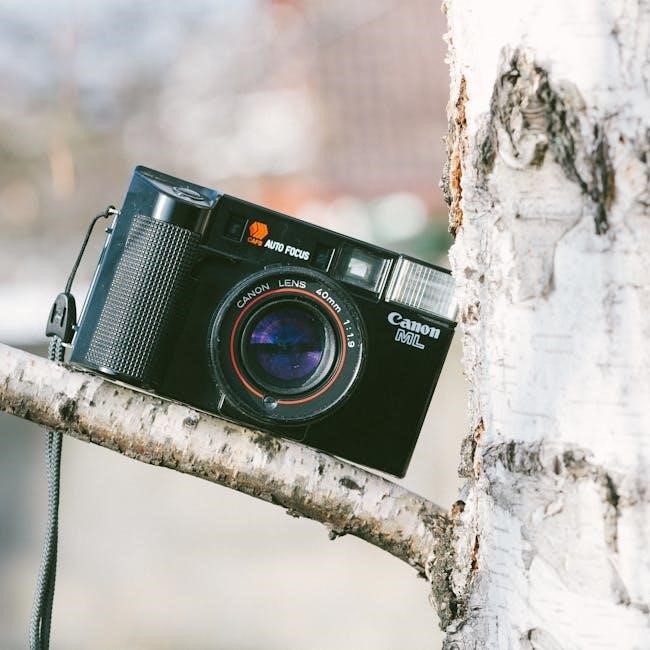
The Canon 80D excels in outdoor settings, particularly for fishing photography. Capture stunning river and lake scenes, adjusting settings for varying light conditions. Utilize faster shutter speeds to freeze action shots of fish or anglers.
Consider using polarizing filters to reduce glare on water surfaces and enhance colors. Protect your camera from moisture and elements during lakeside adventures, ensuring lasting performance.
River and Lake Photography Tips
Maximize your Canon 80D’s potential when photographing rivers and lakes. Employ aperture priority (Av) mode for depth of field control, blurring backgrounds or sharpening foreground details. Utilize a moderate ISO to balance image clarity and low-light performance.
Experiment with composition, incorporating leading lines and the rule of thirds. Protect your gear from spray and humidity, and consider a remote shutter release for stability during long exposures.
Camera Use in Various Lighting Conditions
Adapt your Canon 80D settings to diverse lighting scenarios. In bright sunlight, use a smaller aperture (higher f-number) and lower ISO for sharp, well-exposed images. For low-light conditions, increase ISO and utilize a wider aperture to gather more light.
Explore the 80D’s HDR mode for balanced exposure in high-contrast scenes. Monitor your histogram to avoid clipping highlights or shadows, ensuring optimal image quality in any environment.
Using the Canon 80D for Video Content Creation
The Canon 80D excels in video, offering full HD recording. For YouTube, prioritize stable footage; consider a tripod or image stabilization. Zoom lens choices, like Canon or Sigma options, impact framing flexibility.
Utilize external microphones for superior audio quality. Experiment with manual mode for creative control over exposure and focus. Remember to check video resolution and frame rates for optimal results.
Camera Recommendations for YouTube Videos
The Canon 80D is a strong contender for YouTube content creation, offering excellent video quality. Consider pairing it with a versatile zoom lens – Canon or Sigma – for dynamic shots. Prioritize good audio; an external microphone is crucial.
Focus on stable footage, utilizing a tripod or image stabilization. Explore manual mode for creative control. Remember to optimize video settings for YouTube’s specifications, ensuring clear and engaging content.
Zoom Lens Considerations (Canon Sigma)
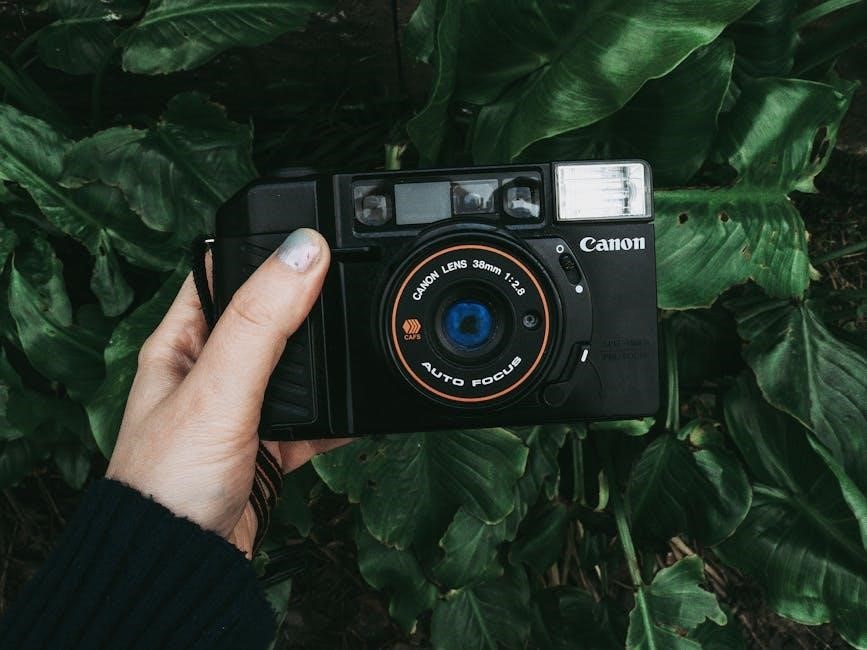
When selecting a zoom lens for your Canon 80D, Canon and Sigma both offer compelling options. Canon lenses ensure seamless compatibility, while Sigma provides excellent value and image quality. Consider focal length based on your content – wider for vlogging, longer for wildlife.
Evaluate aperture, image stabilization, and build quality. Research lens reviews and compare specifications to find the best fit for your shooting style and budget.
Maintenance and Care
Proper maintenance extends the life of your Canon 80D. Regularly clean the sensor with a blower or sensor swab to remove dust. Use a soft brush to clean the exterior, and lens cleaning cloths for optics.
Store the camera in a dry, dust-free environment. Avoid extreme temperatures and humidity. Inspect cables and connectors for damage. Periodic firmware updates ensure optimal performance and stability.
Firmware Updates and Support
Canon regularly releases firmware updates for the 80D, improving performance and adding features. Download updates from the official Canon website and follow the provided instructions carefully during installation.
Canon’s support website offers extensive resources, including FAQs, troubleshooting guides, and downloadable manuals. For personalized assistance, contact Canon’s customer support team via phone or online chat for expert help.